How To Tell If A Record Is An Original Pressing
- Hashemite kingdom of jordan Webster
- October 24, 2021
There comes a fourth dimension when you have to part with a record. It could be you lot have upgraded your copy, or you lot are trying to create space in your library, and y'all desire to sell the indistinguishable, or it could be you lot want to brand some money. While selling your records should exist very easy, information technology can sometimes evidence to exist a challenging task. You may have seen a copy of some record sell for only a few dollars and seemingly an identical copy of the same sell for hundreds or thousands of dollars. Many things tin can cause this, including varying conditions of both vinyl, just one of the most critical aspects associated with such is the specific pressing being offered. Proceed reading beneath to learn how to tell if a record is an original pressing so you lot can make a amend decision when buying or selling a tape.
To exist precise, this is a very extensive subject matter. Every record label has a unique mode of cataloging their records. Rather than embrace all the possible variations, which can be thousands. Here we accept a closer look at the fundamental steps you should follow to know if your record is an original pressing.
Many original pressing of a classic record has probably been frequently used. Chances are the sleeve of an original pressing, possibly from the late '70s will non be in the best condition. This does not mean that near mint original pressings exercise not exist, but such pressings are very rare to come up across. This is particularly true for many political party records. In about cases, reissue or newer pressings will have a crisp, clean sleeve with vibrant artwork.
A closer look at the spine of the record sleeve will also help determine whether you have an original pressing. Original pressings normally have a four-letter and number combination similar WXYZ-1234. Other records subsequently the 2d or third pressing have two messages and five number combinations, such every bit XY-12345.
At that place is no classic tape released before the '80s that will take a barcode on the sleeve. Besides, the older original pressings are rarely on the 180-gram vinyl. Any sign of bonus content or something like "Includes the Hit…." Information technology could evidence later pressings. Also, unless yous are considering a contempo release, the early original pressings practice non include any download code carte du jour. Current records, withal, tin can have some of these things. For instance, the original pressing of Mazzy Star's most recent album "However" EP does non include a download carte du jour.
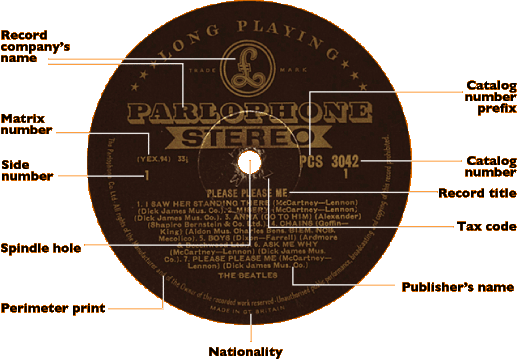
While this number in itself might not be so significant, information technology could still requite you an thought about the record y'all want to list. Catalog numbers often started with a 2 or 3 letter of the alphabet code, which is followed past a sequence of numbers. However, these itemize numbers continue changing with time. For example, the united states' version of "Led Zeppelin 2" inverse a few years subsequently it was released from the original SD 8236 to SD 19127. If you lot have different copies of the same record, you should try to compare their catalog numbers and see the variations.
Another way of doing this is by going to Recordgeek.com or Discogs.com to ostend your original pressing. The best way to do this is to try to match the records catalog number with their numbers.
Information technology is of import to check whether you take a foreign edition. Some pressings are more collectible if they are foreign. For instance, many collectors search for Pink Floyd'southward French pressing "Animals." Alternatively, some people use the vinyl formulation utilized past the Japanese pressing enterprises. Still, in that location are cases where yous can have a foreign pressing that is not quite collectible, mainly because the version was created from the backup master tape instead of the original master tape. Information technology is always important to know precisely where your vinyl was pressed.
The next thing that you must always bank check out for is the center characterization. Companies such every bit Reprise used dissimilar colors for their center labels on their original pressings. The "tri-tone" Reprise will go more attention as compared to the label's all-tan version. It is always important to check the label's copyright notices because some reissues will have a copyright add-on year listed.
Furthermore, some reissue companies inscribe their names on the center label. For instance, if a record was released originally on Elektra, simply the record shows Sundazed, then y'all will know that this is not an original, but a reissue. If your characterization says Mono, and then you lot can be sure that this might exist an original considering Mono'southward was phased out dorsum in the '60s.
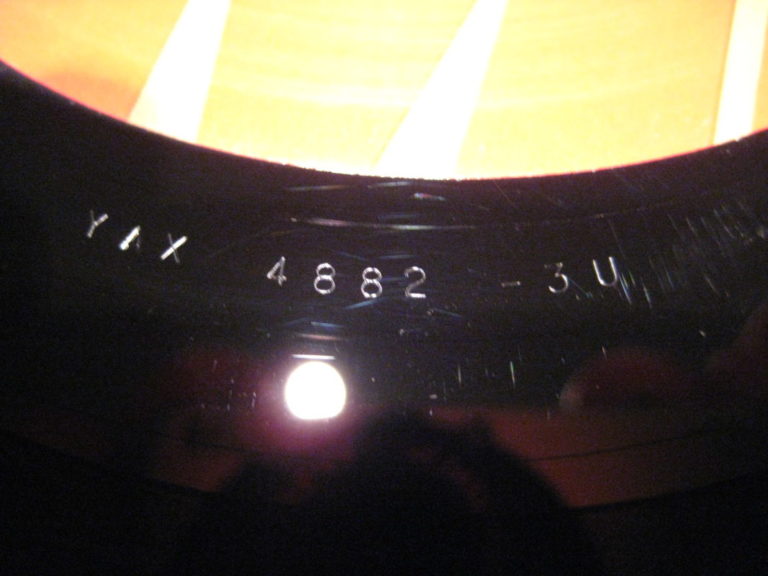
The dead wax will reveal any cloak-and-dagger you want to know about your record. Most albums will have visible inscriptions; they can be stamped or handwritten, found in the records run-off groove surface area. Essentially, it is this field that is known as the dead wax. Also, the matrix numbers located here can exist useful in determining the type of record you have, what lacquer or stamper was used, or the side of the album y'all are looking at. These inscriptions are normally fabricated by a mastering engineer who designed the lacquer used for your records pressing plate.
As mentioned earlier, although there are international standards, dissimilar companies have unique ways of cataloging their records. The matrix number starts with a itemize number, which is subsequently followed by stamper and side information. Side 1 of an original pressing might end in "1A" or "-A," with the matrix of side 2 ending with "1B" or "-B1." Some companies chose to use the "A1/B2" schema. It is for this reason that you should carefully bank check both sides of the vinyl to know the format used.
A significant exception to this rule is Capitol. There are many instances where Capitol pressings have used letters to show the type of lathe that the lacquer was cut on. For example, Fleetwood Mac's original pressing of ubiquitous "Rumors" volition be something such every bit "BSK-1-3010 F22." If this is the reading, BSK 3010 represents the catalog number, F is the Neumann lathe, and "i" between BSK and 3010 is the side. This was the 22nd release and, therefore, not an original pressing. Although information technology was not the first pressing, it must have been released early on in the product of the album.
Call back to look out for any manus-etched or stamped initials. In nearly cases, mastering engineers will sign their work. That is because most of the engineers accept loyal fans that are willing to pay for their hand-etched cuts. For example, Robert Ludwig'southward RL initials that have been etched in the "Led Zeppelin Two" will, without a dubiousness, get your attention. Other initials that y'all should probably look out for include KG (Kevin Gray), LH(Lee Hulko), RVG(Rudy Van Gelder), BG (Bernie Grundman), and Pecko Duck (George Peckham), but to name a few.
You should check whether everything is as it ought to be about the tape. Cheque out for annihilation that looks abnormal about the record, including etched side, holographic labels, and dice-cut sleeve, or colored sleeve. Any of these things can prove that the record is a limited edition. Most records accept a limited collector edition. If the record seems to exist flashier than a standard anthology, and then you have one right there.
While at that place is no instant way of telling whether a tape is an original pressing, nosotros accept listed some of the virtually fundamental tried and tested methods that will get you the results you are looking for. Knowing exactly how a record is printed and distributed makes a huge difference betwixt paying hundreds of dollars for a second or third pressing of the tape.
Yous should non assume that merely because a record is shrink-wrapped, and so information technology must exist an original pressing. This is one of the tricks that many record sellers use on gullible buyers looking for original pressings.
Following these steps will help you immensely to determine whether you have an original pressing or a reissue.
Videos Related to - How To Tell If A Record Is An Original Pressing
Articles Related to - How To Tell If A Record Is An Original Pressing
meyersliare1952.blogspot.com
Source: https://vinylvirgins.com/how-to-tell-if-a-record-is-an-original-pressing/#:~:text=A%20closer%20look%20at%20the%20spine%20of%20the%20record%20sleeve,%2C%20such%20as%20XY%2D12345.

Enregistrer un commentaire for "How to Know if You Have a First Pressing"